Import dependency
90%
of animal vaccines are imported today, creating a critical vulnerability in national biosecurity and the food-supply chain. Local manufacturing covers less than 20% of production-animal biologics across the GCC.
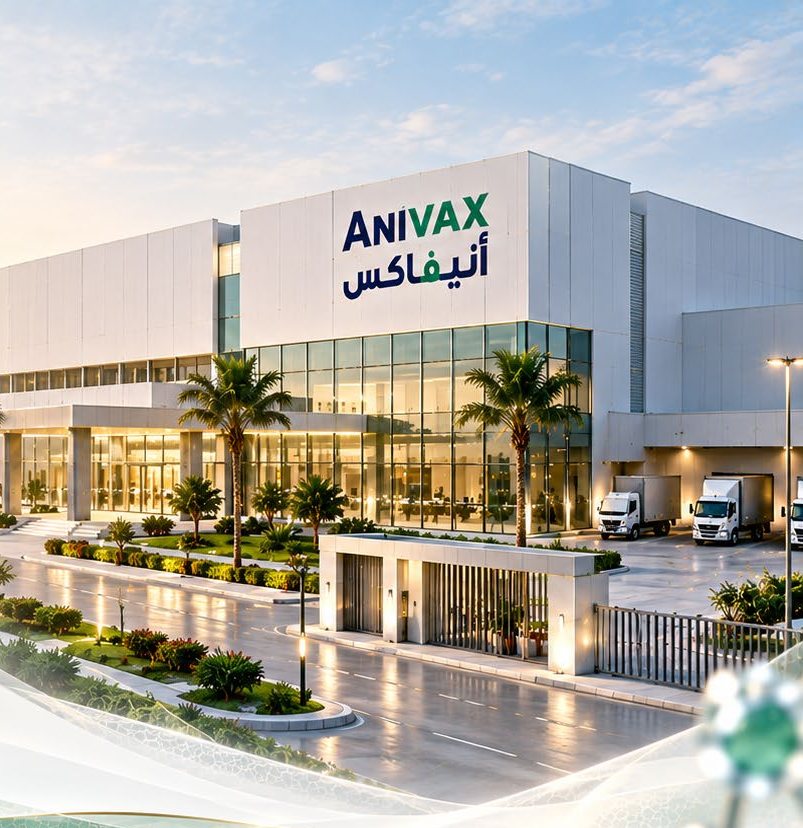
Saudi Arabia's first integrated animal vaccine hub — manufacturing sovereignty for a more secure, self-sufficient Kingdom.
AniVax strengthens Saudi Arabia's food security through sovereign vaccine production and advances the Kingdom's economic resilience. The hub is directly aligned with Vision 2030, the National Biotechnology Strategy, and the Saudi Food Security Strategy — reducing reliance on imported biologics and building a domestic manufacturing base the region can depend on.
90%
of animal vaccines are imported today, creating a critical vulnerability in national biosecurity and the food-supply chain. Local manufacturing covers less than 20% of production-animal biologics across the GCC.

20–30%
rise in protein demand is expected across the GCC by 2030, as population growth and changing diets push livestock and poultry producers toward a secure, local vaccine supply.
4–12mo
shortages hit critical poultry vaccines between 2020 and 2024. Cold-chain complexity adds a further 8–15% wastage to imported biologics in transit.
SAR 750M–1.5B
in annual savings is possible for the Kingdom's livestock economy through import substitution. Local production can cut vaccine costs by 15–40%.
10–30%
higher efficacy is achievable using local isolates instead of generic global strains — decisive in a region facing recurrent outbreaks that cost hundreds of millions annually.
Vision 2030
sets the mandate: localize biotechnology manufacturing, strengthen food security, and diversify the economy away from oil.
Phase 1 is designed for 50–100 million doses a year, built on modular, single-use bioreactor systems for maximum flexibility, lower initial capital expenditure, and rapid product changeover.
Manufacturing
A highly contagious viral disease affecting the respiratory, nervous, and digestive systems of poultry flocks.
Targets the immune system of young chickens — a leading cause of economic loss across the poultry sector.
A high-impact viral disease with major trade and biosecurity consequences for commercial flocks.
A highly contagious viral disease of sheep and goats, and a priority target for regional eradication efforts.
A viral cattle disease causing skin lesions, production loss, and significant trade restrictions.
A zoonotic bacterial disease affecting livestock fertility, productivity, and public health.
Saudi Arabia's animal-vaccine market is expanding well ahead of the broader economy, with poultry products leading demand.
A global leader in animal health, supporting AniVax with veterinary vaccine technology, expertise, and a tech-transfer framework for local manufacturing.
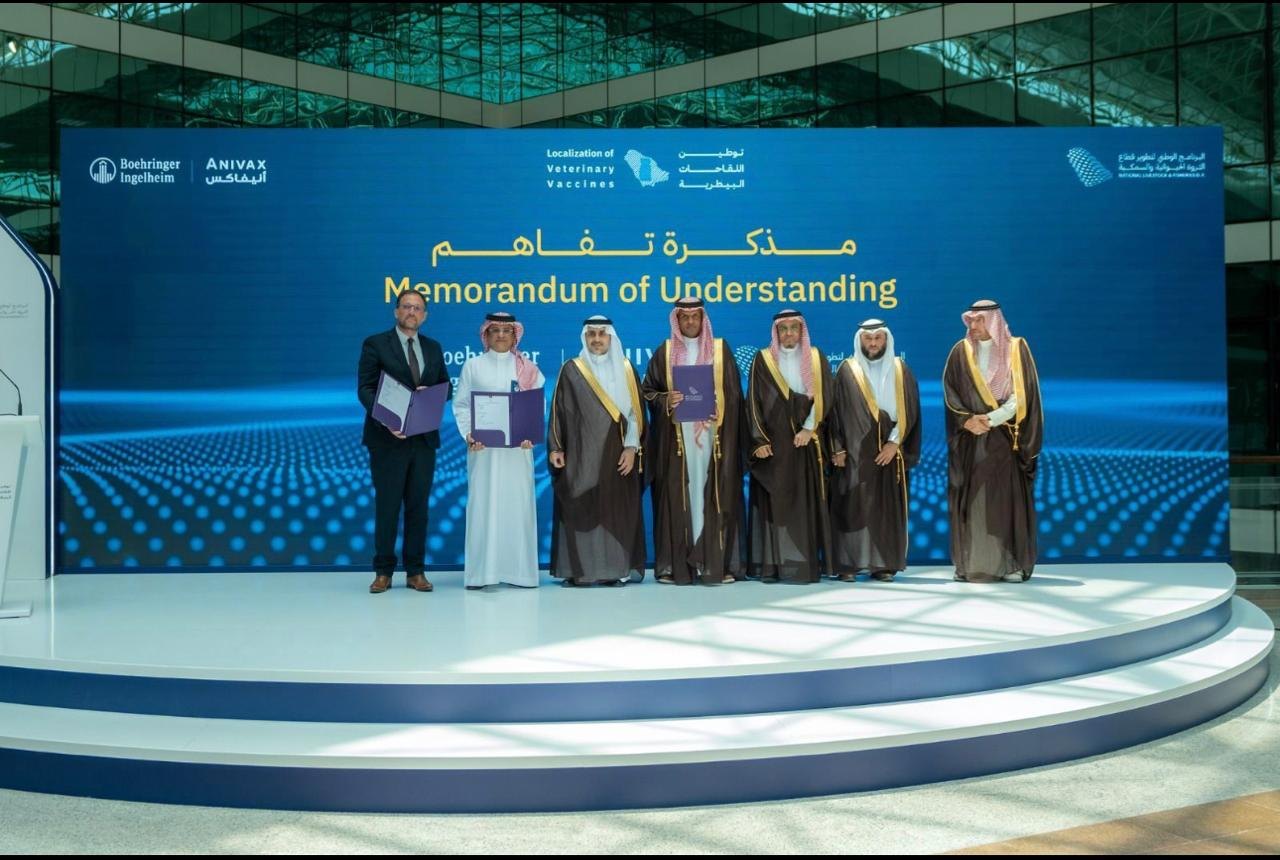
Between the parties
National Livestock and Fisheries Development Program (NLFDP)
Boehringer Ingelheim Animal Health France
AniVax
Signed 22 June 2026
Vision 2030
Vision 2030
National Biotechnology Strategy
Saudi Food Security Strategy
BIOERA is a Saudi-based project management and consulting company headquartered in Riyadh, specializing in turnkey solutions for the biotechnology and pharmaceutical industries.
End-to-end delivery for biopharmaceutical and life-sciences facilities, from concept design through to production.
Modular facility solutions delivered in collaboration with leading international strategic partners.
Serving the GCC region, with reach extending into MENA and Asia on a proven track record.
Insulin and biopharmaceutical manufacturing partner within the Kingdom's growing life-sciences ecosystem.
A state-of-the-art vaccine biomanufacturing facility — 42,000 m² in Sudair Industrial City, 11 vaccine products, SAR 1,078M revenue projected by 2030.
Explore partnership, investment, technology transfer, and collaboration opportunities with AniVax.
Building No 4180, Unit 6708, Northern Ring Branch Road
Alwadi, Riyadh, Saudi Arabia